

Countries
Norway
Lofoten & Vesterålen road trip: everything you need to know!
Posted on
6/9/2026

Simon and I had been dreaming of Iceland for a good while, so when we got the chance to spend 7 days road-tripping with Iceland Nomads and Travelbase, we said yes on the spot! The concept? A turnkey trip (equipped vehicle, campsites, roadbook, app, French-speaking support) where you keep total freedom!
In this article, we tell you everything: what we loved, what surprised us (the temperatures and the very moody weather), our honest take on this kind of trip, our real budget line by line, and above all our concrete tips so you don't make the same mistakes we did. Get comfy and warm (you at least) to read all this.


In case you don't know it yet, Iceland Nomads (offered by Travelbase) is a self-drive road trip along Iceland's roads. With a fully equipped vehicle, you follow an itinerary designed by enthusiasts, and you just enjoy. And that's exactly what we loved!
This formula is the sweet spot between an organised tour and a 100% do-it-yourself road trip:
For those who are unsure or don't know Travelbase: it's 100% reliable. It's a Belgian agency that offers trips in more than 20 destinations! You can genuinely book with your eyes closed. The team is responsive, and honestly, the value for money is more than reasonable!
But we'll come back to the budget in more detail later!
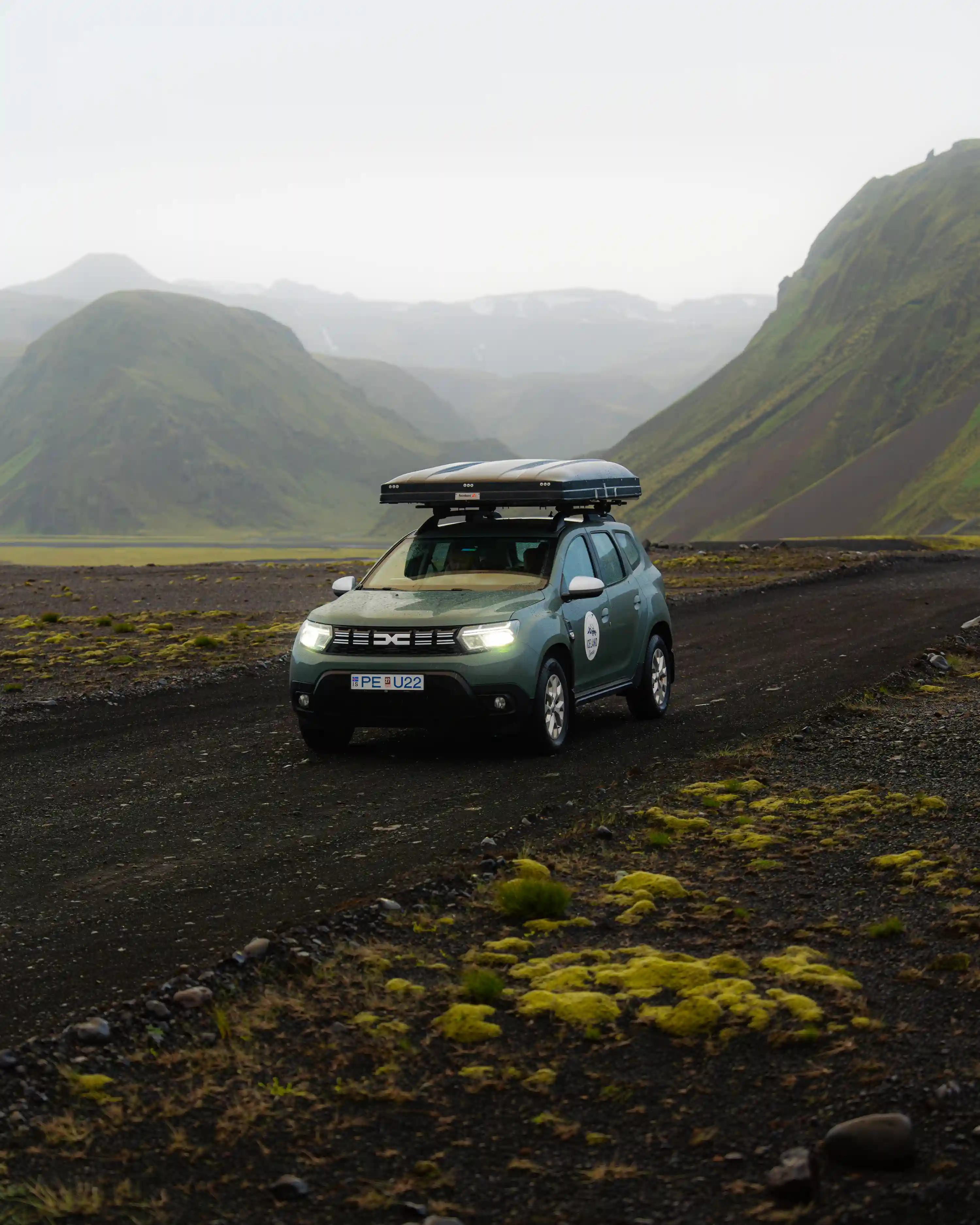
You've got a choice between a 4×4 with a rooftop tent and a camper van. We went for the 4×4 rooftop tent.
Now let's be honest: it looks amazing, we love the aesthetic… but with the chilly weather we had in June 2026, we slightly regretted not taking the van.
The nights were really cold and you could feel it in the tent. On my side, I slept with 4 layers on (yep, I'm really not exaggerating 😳)! Simon coped better, but even he — and he's not one to feel the cold — admitted it was freezing.
So our advice if you feel the cold (or if you travel early/late season): the camper van will be much more comfortable.
On the other hand, the downside of this vehicle is that it won’t allow you to take the F roads (we’ll talk more about those below) and you’ll have to take an alternate route on the last day of your trip. The choice therefore comes down to comfort and, to a very small extent, the route—depending on whether you absolutely want to go through the Highlands or not.
The Iceland Nomads road trip comes in 7 days (what we did) and 10 days. Honestly, Iceland is so packed with wonders that 7 days is intense (more on that below) and borderline too short. If you can, the 10 days will let you breathe more and tick off more spots without rushing.
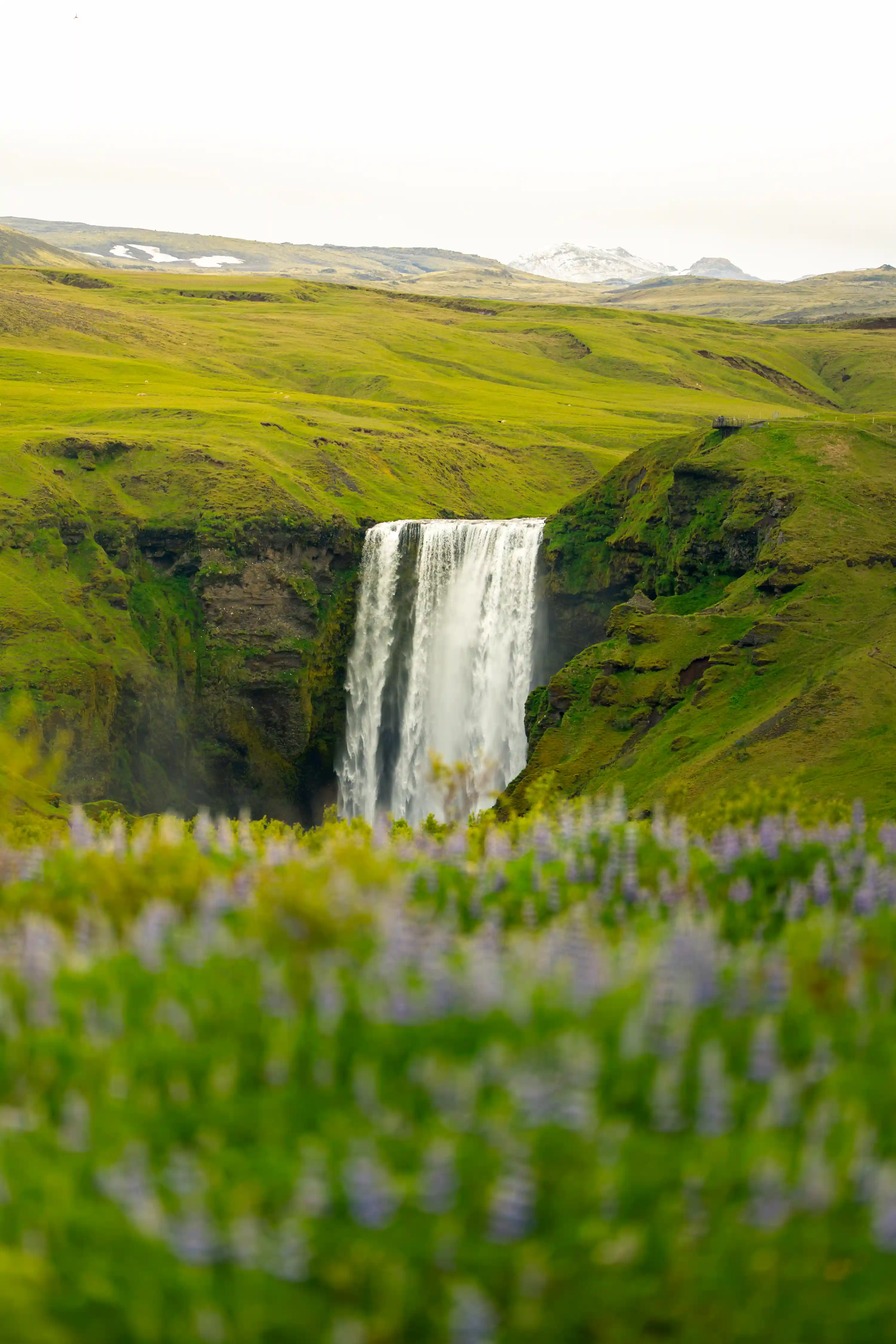
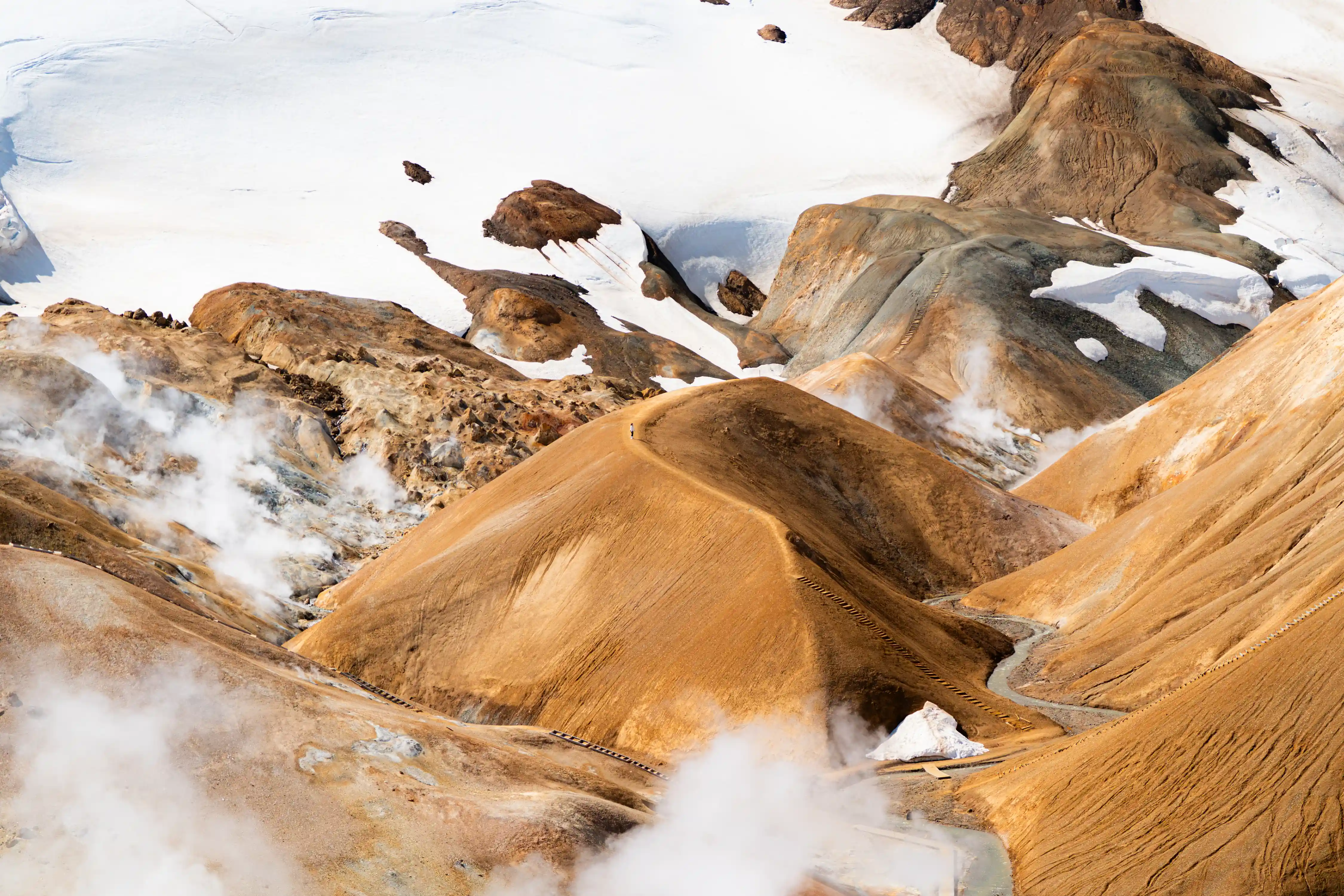
We won't break the itinerary down hour by hour, but rather give you the spirit of the route: over 7 days, you follow the south then head up and go around the island anti-clockwise. Waterfalls galore, black-sand beaches, glaciers, canyons, geothermal areas… Each spot is more beautiful than the last (we're really not joking)!
Our favourites ❤️:
Our best itinerary tip: do Seljalandsfoss at sunset on the very first evening (even though this waterfall is scheduled for day 2 in the roadbook). The light there is just magical, and since in summer it's daylight almost around the clock, you've got time to get there without any stress. In June, we got this gorgeous show between 11:30 pm and 00:15 am.
But it's all well and good talking about our favourites — it's also important to mention what went less smoothly:
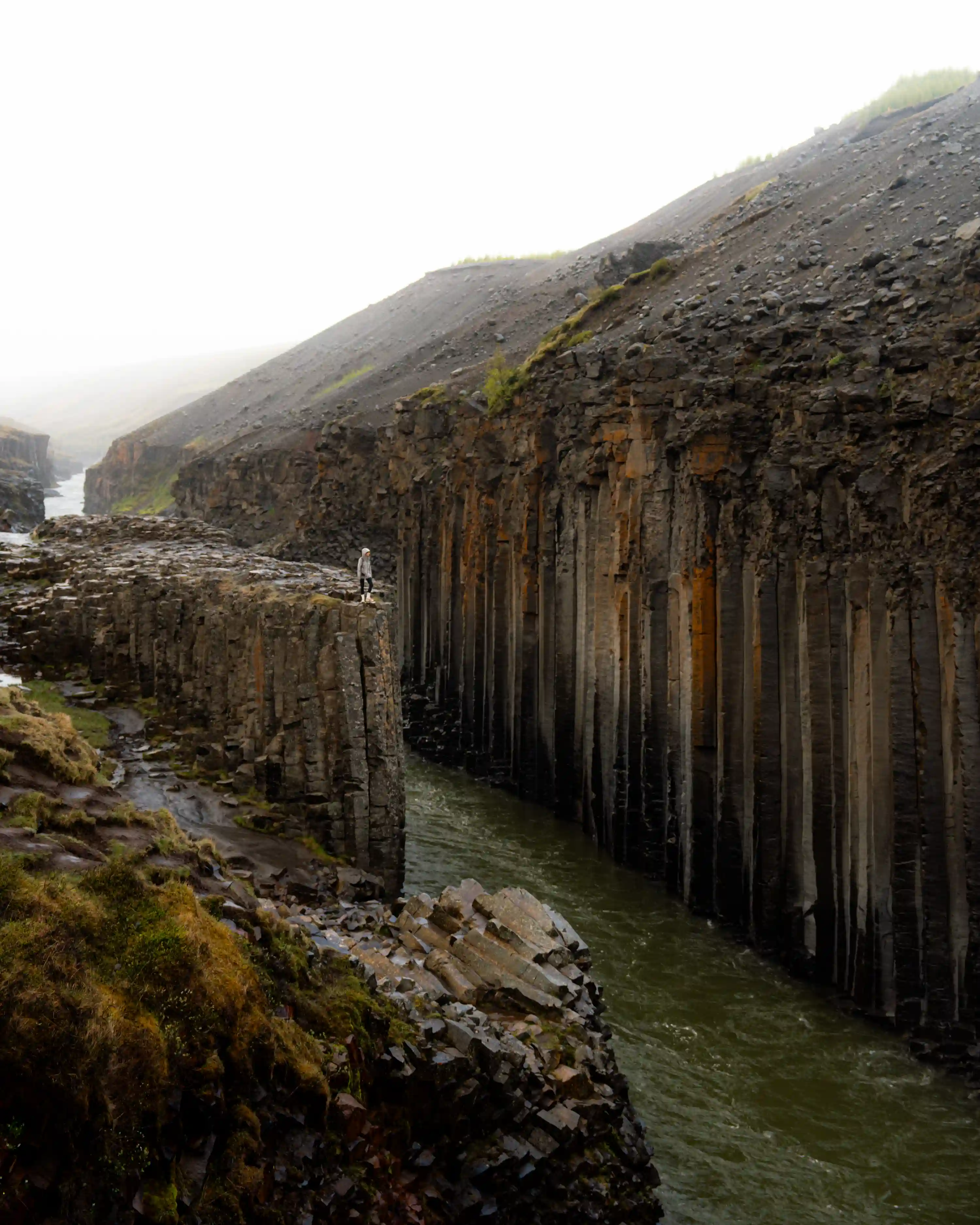
If there's one thing to take away from this article, it's this one: Icelandic weather is completely unpredictable, from one day to the next and even within the same day! We had rain at least 5 days out of 7, lots of wind and temperatures around 5°C (feels like 0°C), whereas before leaving the forecast only told us it would be overcast and around 10°C (feels-like).
What a mistake to have trusted the forecast! Because once there, with our 5°C feeling like 0°C, we can tell you we were properly cold (and had no warm enough clothes to heat us up…). So keep in mind that the feels-like is often much lower than the displayed temperature because of the wind, but above all: don't listen to the forecast and pack thermal and warm clothes no matter what!
Another important weather point to bear in mind: even in summer, you can get rain, hail, violent wind, even snow. And even if you're lucky and dodge the bad weather, there are still the waterfalls. You can get close to some, even walk behind them, and in that case you'll come out drenched!
Our checklist so you don't get caught out like us:
We still hope you'll have more luck than us weather-wise, because the moment a ray of sunshine appears, trust us, it's pure bliss!
Iceland has a reputation for being expensive, and it's completely true. But with the Iceland Nomads formula, a big part of the budget (vehicle, campsites, gear, activities and even meals if you took the Foodpack option) is already sorted. On-site, what's left is fuel, parking and a bit of shopping for the greedy ones.
Here's what we actually spent, for two:
💰 Our Travelbase trip budget before departure (7 days, 2 people)
Total: €4,119, i.e. €2,059.50 per person.
💰 Our on-the-ground budget (7 days, 2 people)
Total on-site: €482, i.e. €241 per person.
So the trip cost us in total: €4,600 for two, i.e. €2,300 per person, for 7 days of road-tripping in Iceland. (Handy reference: 1 € ≈ 143 ISK.)
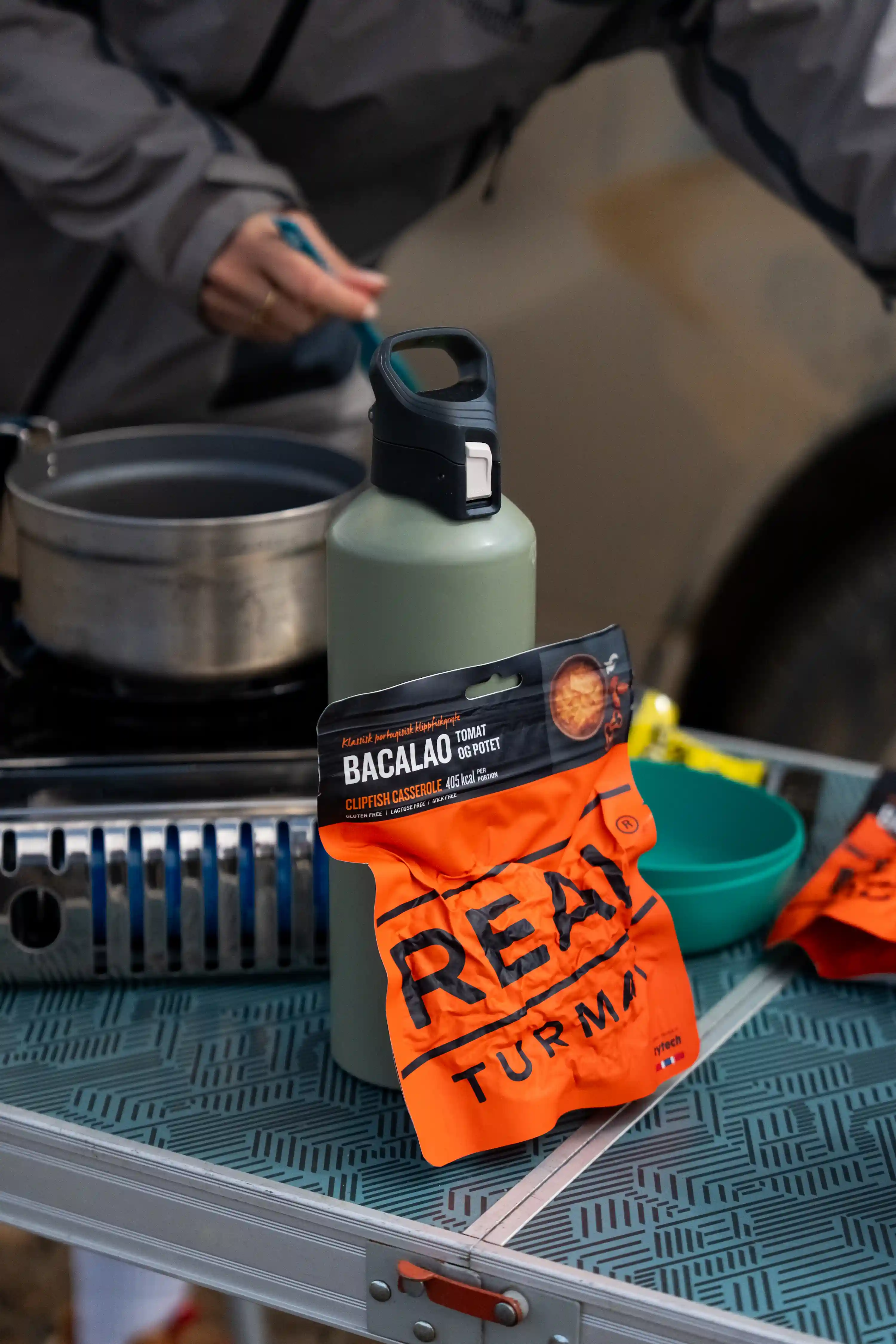
The "Foodpack" offered by Travelbase 115€/person) is really great and makes for lovely savings! Given the price of restaurants — and even simple groceries over there (that's what explains our €30 of shopping over the whole week, just for water, crisps and yogurt) — we recommend it wholeheartedly!
It's made up of freeze-dried meals (which are genuinely tasty and filling), a few sweet and savoury snacks, pasta, sauces, and Swedish bread (sandwich-loaf style).
In Iceland, the majority of car parks are paid, with cameras and number-plate recognition. We were told that the moment you enter the car park, you're detected and you have to pay, on pain of receiving a fine in the following days! It makes sense really, but the good news we learned is that there'd be a margin of error of about 10 minutes (if you enter but ultimately don't stay). It happened to us in one car park where we stayed literally 1 minute, without even getting out of the vehicle, and we paid to avoid a fine — but in fact, we could have not paid.
On the parking front, Travelbase also recommended the Parka app. It's super handy because you manage everything from your phone. It's paid though (either a commission per car park, or a subscription of under €4/month, worth it from 4 car parks). Just remember to unsubscribe at the end of the trip so you're not charged the following month. Otherwise, there are also machines at each car park (with no extra fees).
The campsites selected by Travelbase are genuinely superb spots every time! Our only small disappointment was the last campsite, Þingvellir (Thingvellir), a notch below in terms of facilities, with no kitchen (just outdoor sinks, showers and toilets).
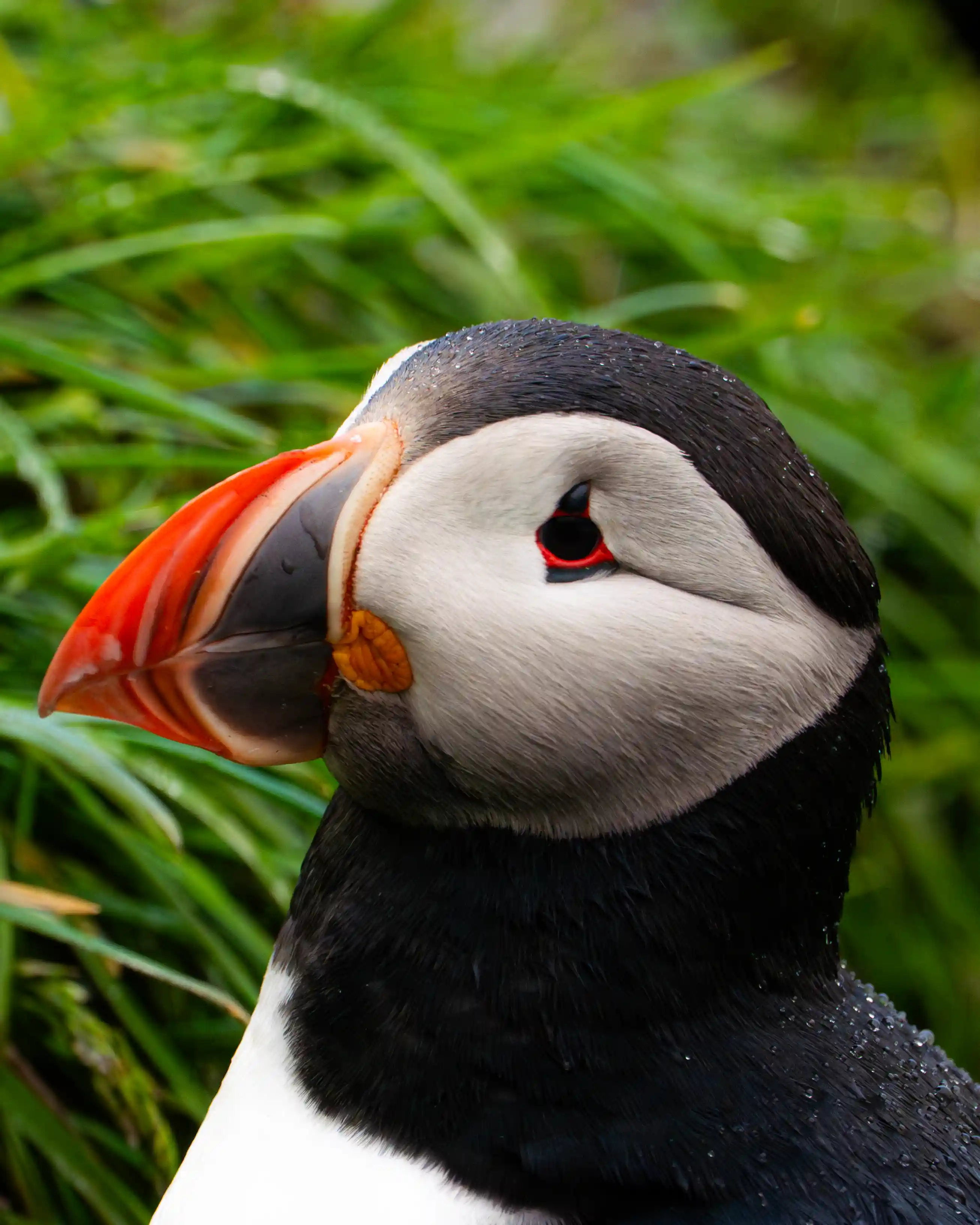
Iceland is absolutely magnificent! And we're saying that despite being far from having had ideal conditions. Even in the rain, it's more than worth it. Put simply: we already know we'll be back!
The only real "complaint" we could make is that there are too many beautiful things to see, and that depending on the day, you have to make choices and accept missing out on some spots 🥲 (yes, making choices has never been my strong suit, so accepting not to see everything was really hard).
For us, since we were there to work in content-creation mode, and we therefore spend much more time at each spot, we admit the pace was super intense over 7 days. But if you come in holiday mode, it's far more chilled: you let yourself be carried by the weather, your desires and the endless days.
The midnight sun (especially in June and July, but the rest of the time, from May to September, there's very little night) has a lot to do with it. It's truly magical to experience, even if it takes a little time to adjust.
The flip side is that you lose all sense of time and end up chaining spots until you realise it's past midnight! 😅 Yes, that's from experience!
✅ To sum up, go for it if you love:
❌ Think twice if:
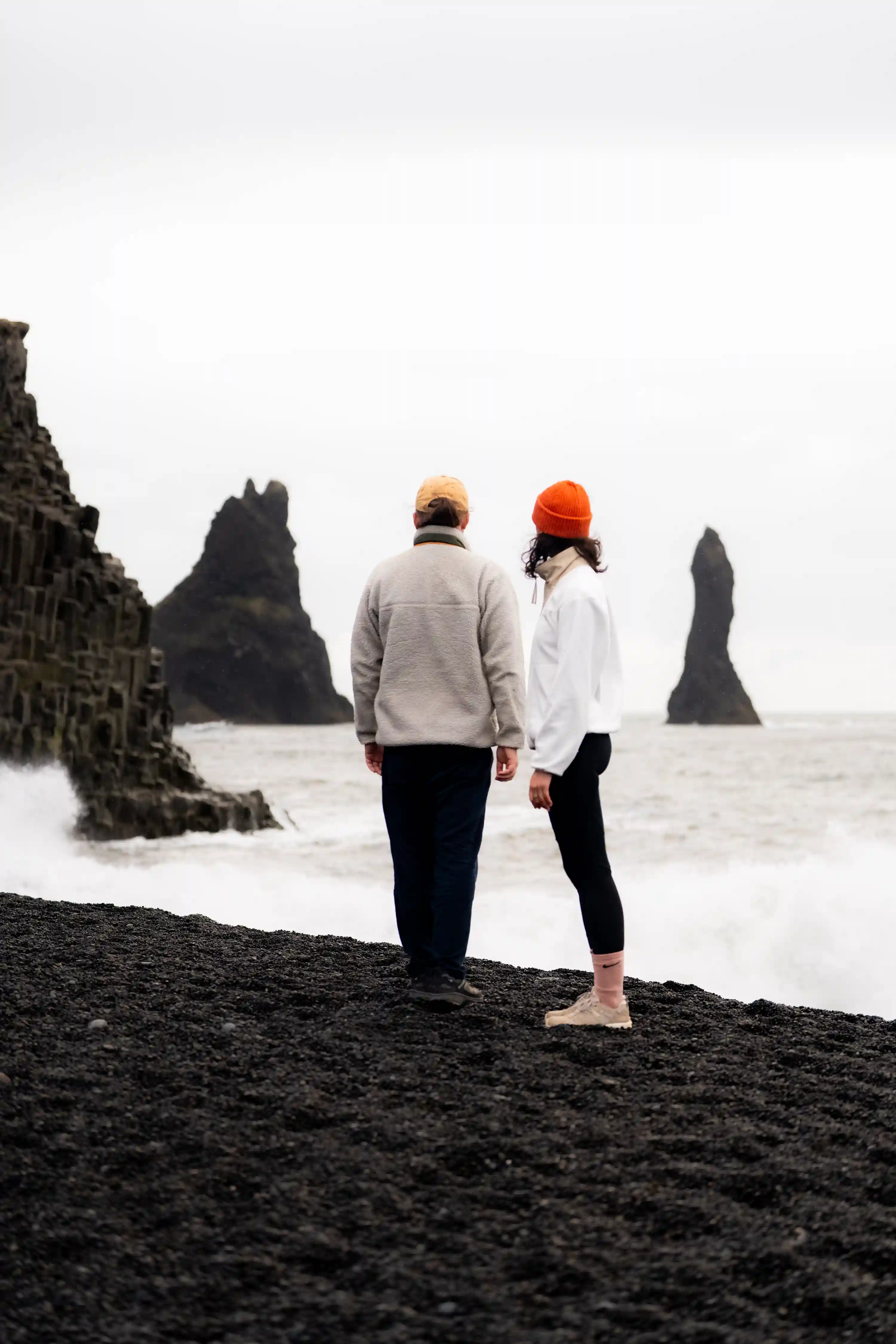
Broadly from mid-May to mid-September: these are the mildest and most drivable months, with huge days (midnight sun in June-July). Summer stays cool, as we mentioned above (often 10-15°C, though it can feel colder because of the wind). Winter is harsher and some roads close, but if you're after the northern lights, that's the ideal time!
Not in summer, unfortunately: the nights are far too bright. For the auroras, you need to come between September and April, when the nights get dark again.
Iceland is an expensive country, and the cost of living is clearly higher than in France. That's no surprise to anyone. If you travel outside an all-inclusive formula, you can easily count €150 to €250/day/person depending on your comfort. With Iceland Nomads, the vehicle, camping, meals and gear are already included. As we detail above, on-site our real expenses were mainly fuel, parking and a tiny top-up of groceries, which comes to only €34/day/person (or €50/day/person if you add the Foodpack, paid when booking the trip with Travelbase).
Your French (or European) licence is enough. You don't need an international licence. As for the type of car, for the classic tour of the island (the famous Route 1 and the south, which Travelbase and Iceland Nomads take you on for this trip), driving is easy and well signposted. No particular difficulty, and no need for a 4×4.
On the other hand, for the F-roads that cross the highlands (there's a Travelbase route option that takes you on an F-road), a 4×4 is mandatory.
If you’ve chosen the 4x4 option, you’ll be able to take the F35 without any issues, and we can assure you it’s definitely worth it! On the other hand, if you’ve opted for the van option, you’ll need to take the other route suggested by Travelbase.
The 4×4 with rooftop tent we had was a Dacia Duster (so a "fake" 4×4, more of an SUV with a 4×4 driving option), and it was plenty for the F35.
The main thing is to have a vehicle with plenty of power and, above all, a high bumper, because otherwise, it might scrape the ground repeatedly (and it’s best to avoid that)!
Note that F roads often don’t open until June or July.
We recommend checking road.is (for road conditions) and vedur.is (for the weather) every day.
And if you're there when the F35 is open, take that route without hesitation — it's really worth it!
Yes, and it's even one of the best waters in the world! Bring a water bottle and refill it everywhere — you save money (especially as the supermarket water is literally the same as what comes out of the tap) and you avoid plastic.
The currency is the Icelandic króna (ISK). For reference, 1 € ≈ 143 ISK. But in practice you pay everything by card, even a baguette or a car park, so no need to withdraw cash.
By the way, to avoid exorbitant bank fees, we recommend having an international debit card. We’ve had the BoursoBank Visa ULTIM card since 2021, and we’re very happy with it.
It’s free (as long as you make at least one payment per month), and there are no fees on payments or withdrawals, regardless of the currency. Perfect for travelers!
Plus, if you’re not already a customer, use our referral code LEGA1596 (or the link in the button below) when opening your first account, and you’ll receive a bonus ranging from €80 to €220 (depending on the current offer and the conditions met). It’s a free gift! 🎁😉
For supermarkets, we recommend Bónus and Krónan, and for fuel, we filled up every time at Orkan, the cheapest station we found.
It's doable, but if you feel the cold, the camper van is more comfortable than the rooftop tent. No contest! You don't have to go outside to cook, wash or go to bed. Plus, the wind doesn't chill the cabin. Unlike the rooftop tent, where you can't cook inside, and where, if there's wind, you'll feel it and it'll chill the inside of the tent. On top of that, if it buckets down every day, the tent gets soaked, and it can also wet the sheets and mattress… That wasn't our case, thankfully, but it can happen! In any case, the campsites often have a kitchen area where you can settle in and warm up, plus heated toilets and showers. And that's a real treat!
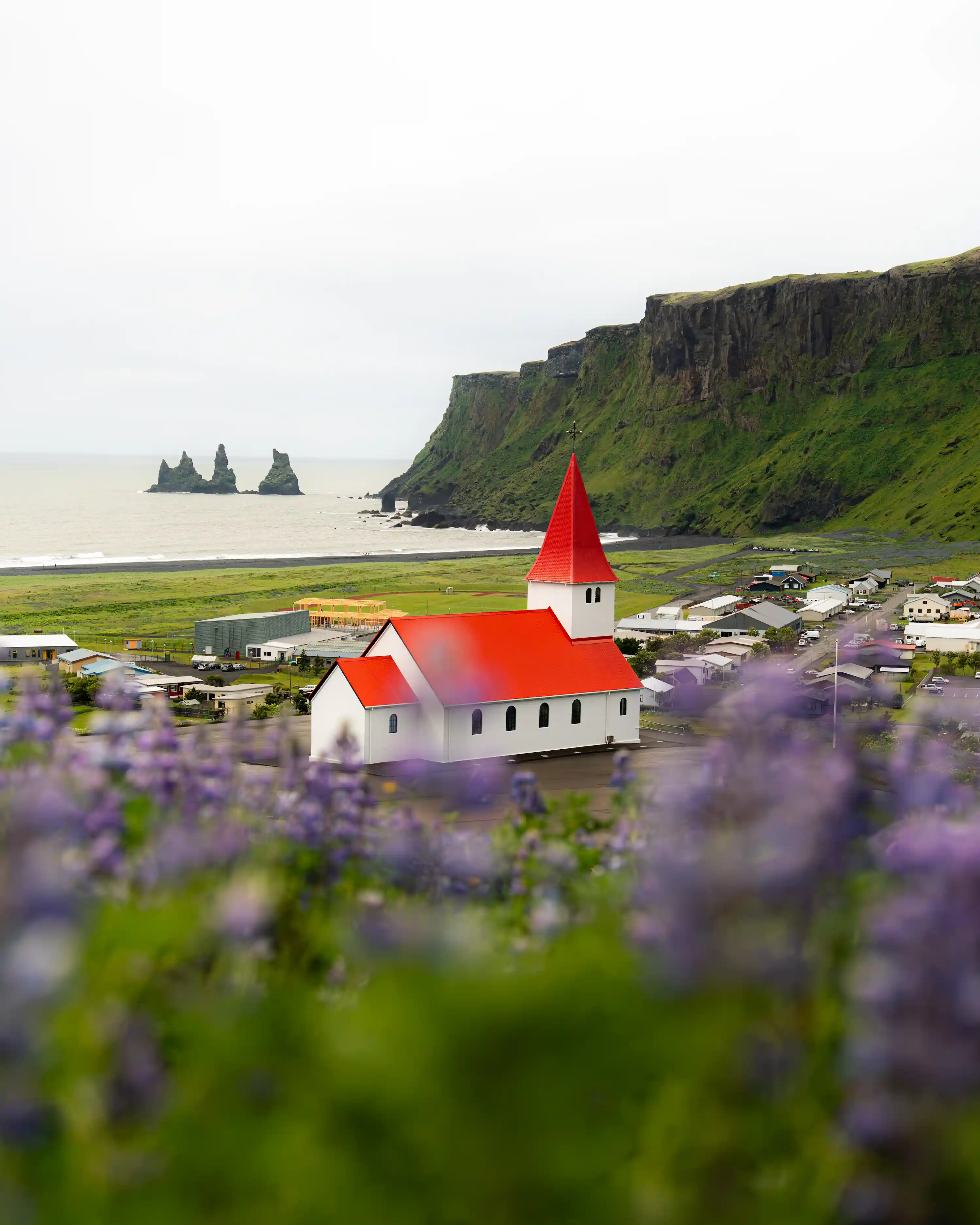
Honestly, Iceland is an incredible trip!
We had rain, wind, cold, a failed whale-watching outing and a cancelled kayak… and yet we come away with stars in our eyes and the urge to go back! That says a lot about how much this country is worth it. I sincerely think it's impossible to be disappointed by Iceland. I just don't see how it's possible.
And the Iceland Nomads formula won us over 100%: the freedom of a road trip without the mental load of organising, in a destination where everything is expensive and logistics-heavy. It's genuinely clever. If you fancy the adventure, you can find the trip on Iceland Nomads and Travelbase (7- or 10-day road-trip options, and even treks or group trips).
So, does Iceland tempt you?
Tell us in the comments whether you'd rather go in a 4×4 rooftop tent or a nice warm van 😏, and ask us your questions — we're always happy to answer! 🦊
Article produced in collaboration with Travelbase and Iceland Nomads. As always, our opinion and impressions remain 100% our own (the rain and the 4 pyjama layers are proof).
1. Watch out for unpaved roads (F-roads) and river crossings (fords — where the track goes straight across a river in the open), which are also not covered by insurance. It's a real trap in Iceland and tourists often end up stuck. If water reaches the engine, breakdown is guaranteed (the infamous "hydrolock"), with the full repair cost on you. Our rules for crossing a ford: never attempt it if you're not sure of yourself (when in doubt, turn back), get out of the car to check the depth and current on foot, and when you can, follow behind another vehicle to see how the terrain behaves. Cross slowly, no jerky moves, never at speed.
2. Fill up as soon as you reach half or a third of the tank, because petrol stations get rare as soon as you move away from the towns.
3. Whether on foot or in a vehicle, stay on the trails and never walk or drive off the marked paths. The moss and the Icelandic volcanic ecosystem are ultra-fragile and take years, even decades, to regrow — so please don't do anything reckless! It's important to keep these incredible landscapes intact for those who come after us! By the way, going off-track is fined in the country.
4. Always open the car door on the side sheltered from the wind, and with two hands. It sounds silly, but Icelandic gusts can reach up to 100 km/h, which can literally rip a door off its hinges. And the worst part is that this kind of wind damage isn't covered by insurance, with excesses that quickly climb to €1,000 or €3,000. It's one of the most expensive traps in the country, along with the point above.




How about we chat?