

Countries
Norway
Lofoten & Vesterålen road trip: everything you need to know!
Posted on
6/9/2026
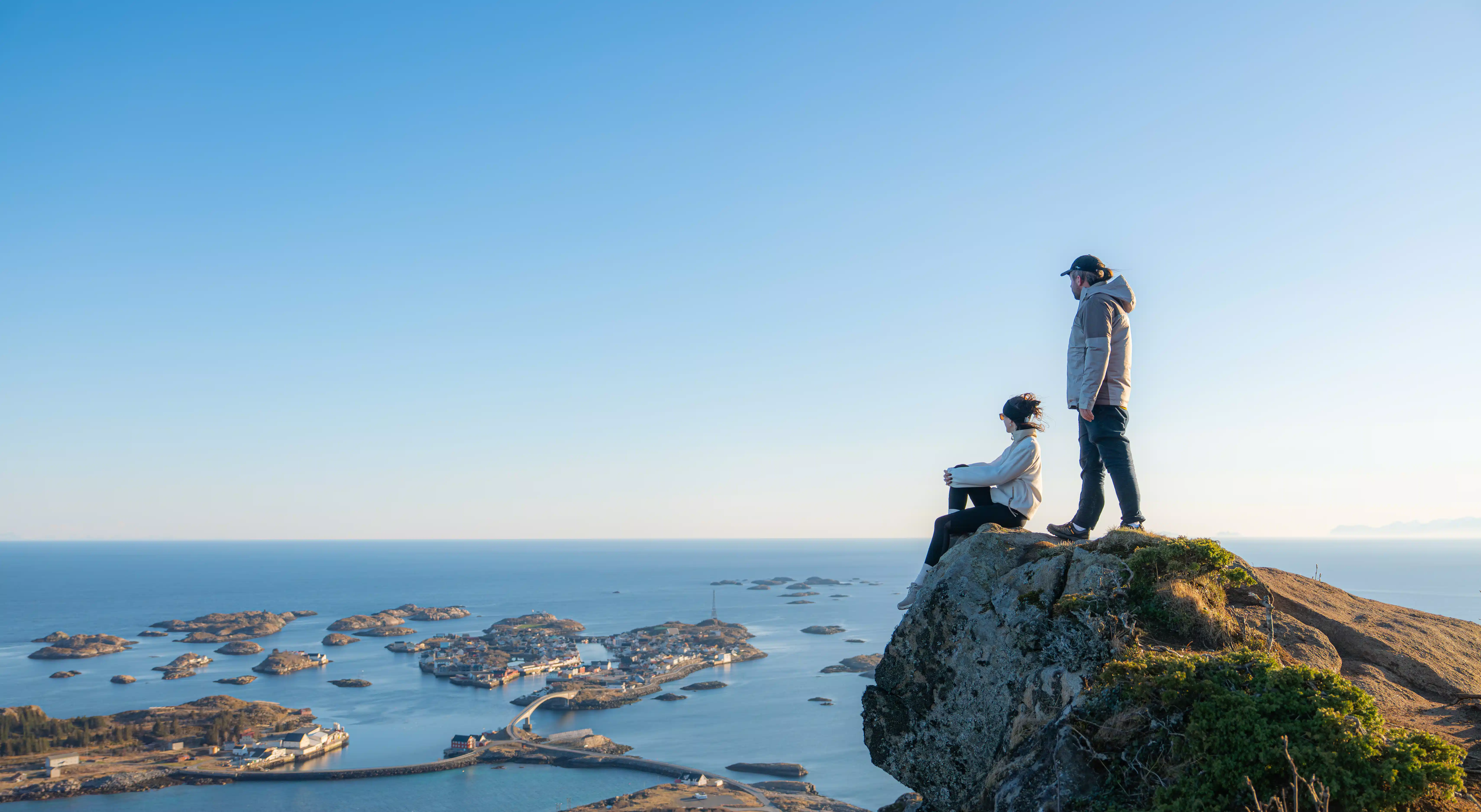

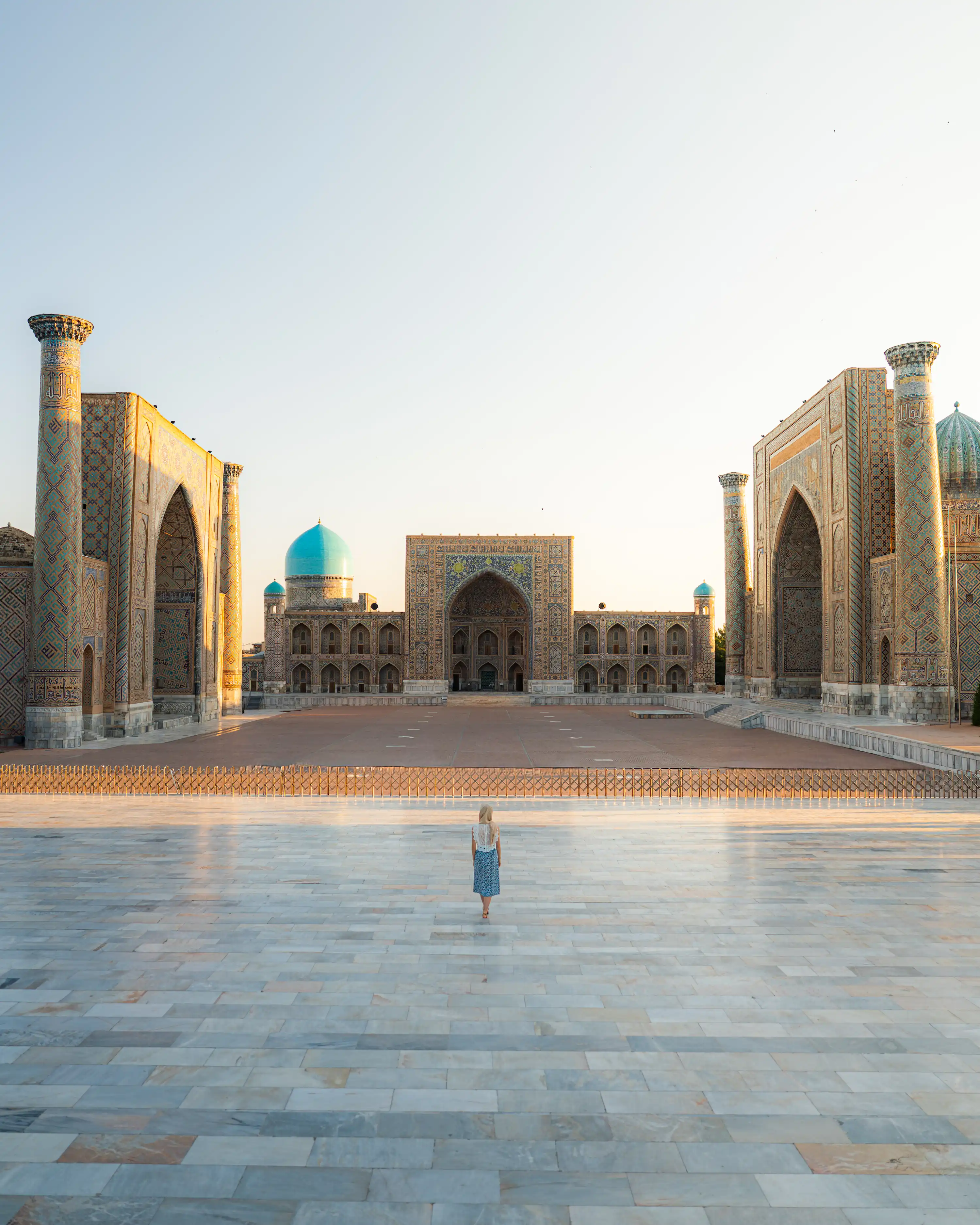
Simon and I set off for 19 days on the Silk Road: 13 days in Kazakhstan then 6 days in Uzbekistan, in a small group with Nomade Aventure. Two countries, two radically different vibes, and an organised trip — even though we usually prefer to sort everything out ourselves.
In this article, we tell you everything: what we loved, what surprised us (for better and for worse), our honest take on group travel when you're more the independent-wanderer type, and whether or not we'd recommend this destination. Get comfy, this is going to be a long one (but we've added photos 📸).


Quick aside to set the scene: when Nomade Aventure offered us this trip, we said yes on the spot! Because the Silk Road is one of those names that make you dream. You instantly picture caravans, camels, merchants, cities lost in the middle of the desert — but you'd be hard-pressed to place it precisely on a map. Let alone say much about the history and culture of these countries…
And that's exactly what intrigued us: a destination that sounds amazing, but that, deep down, we knew very little about.
So we figured a little history refresher wouldn't hurt! We were never taught anything about this part of the world at school, so trust us, we genuinely needed it!
The Silk Road wasn't a single road but a network of trade routes linking China to Europe and the Middle East, from around the 2nd century BC to the 15th century.
Along these routes travelled silk (hence the name, of course), but also spices, paper, ideas, teachings, religions… and plenty of people. Central Asia, sitting right in the middle, was the hub of all this vast trade. This is where legendary crossroads cities like Samarkand and Bukhara grew.
What appealed to us about the offer is that this region is still little-known and barely touristy, especially compared with the big Asian classics.
Say "Silk Road" to people around you and most won't quite know what to picture. It's exactly the kind of destination we love: the kind that's off the beaten track, where you don't bump into a selfie stick every three meters.
Let's get it out there straight away, because it's THE question we've been asked most: we preferred Kazakhstan. And yet both countries are stunning, honestly (and truthfully it's a hard choice)! But the two are really different.
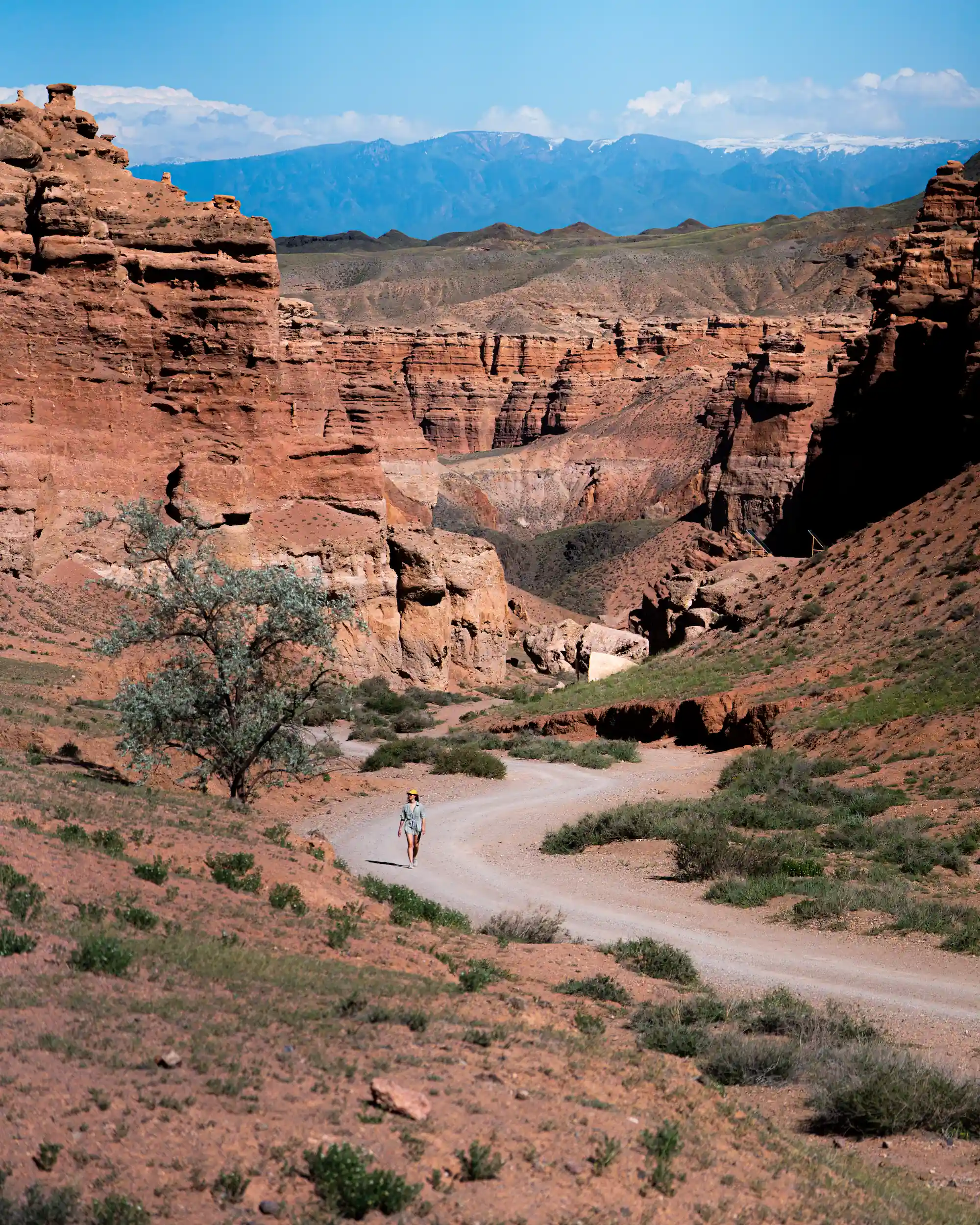
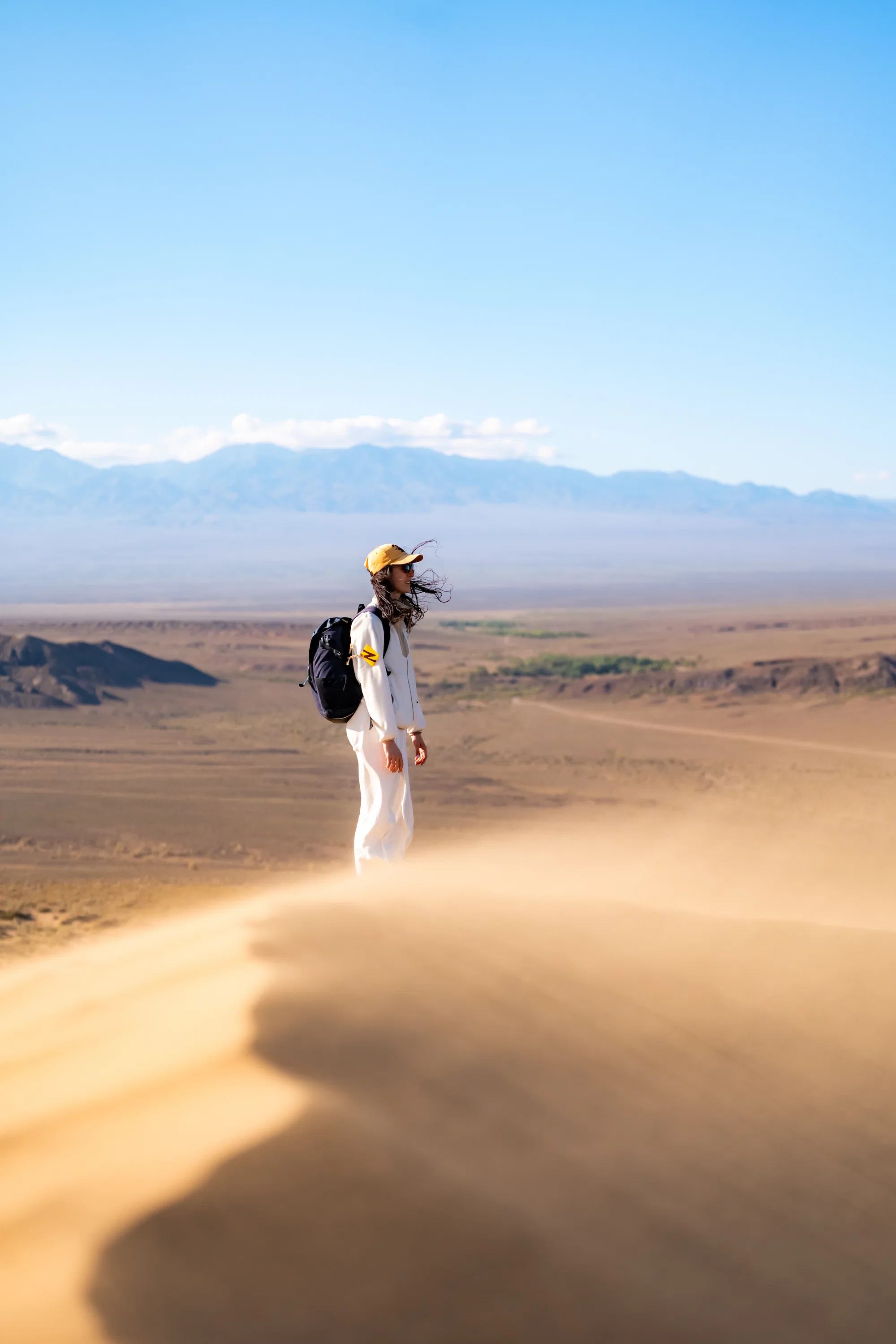
We honestly weren't expecting it, but it turned out to be our massive favourite. Kazakhstan is huge (the 9th-largest country in the world, no less), wild, natural, and above all barely touristy. At times, it felt like we had entire landscapes all to ourselves.
The places that blew us away the most:
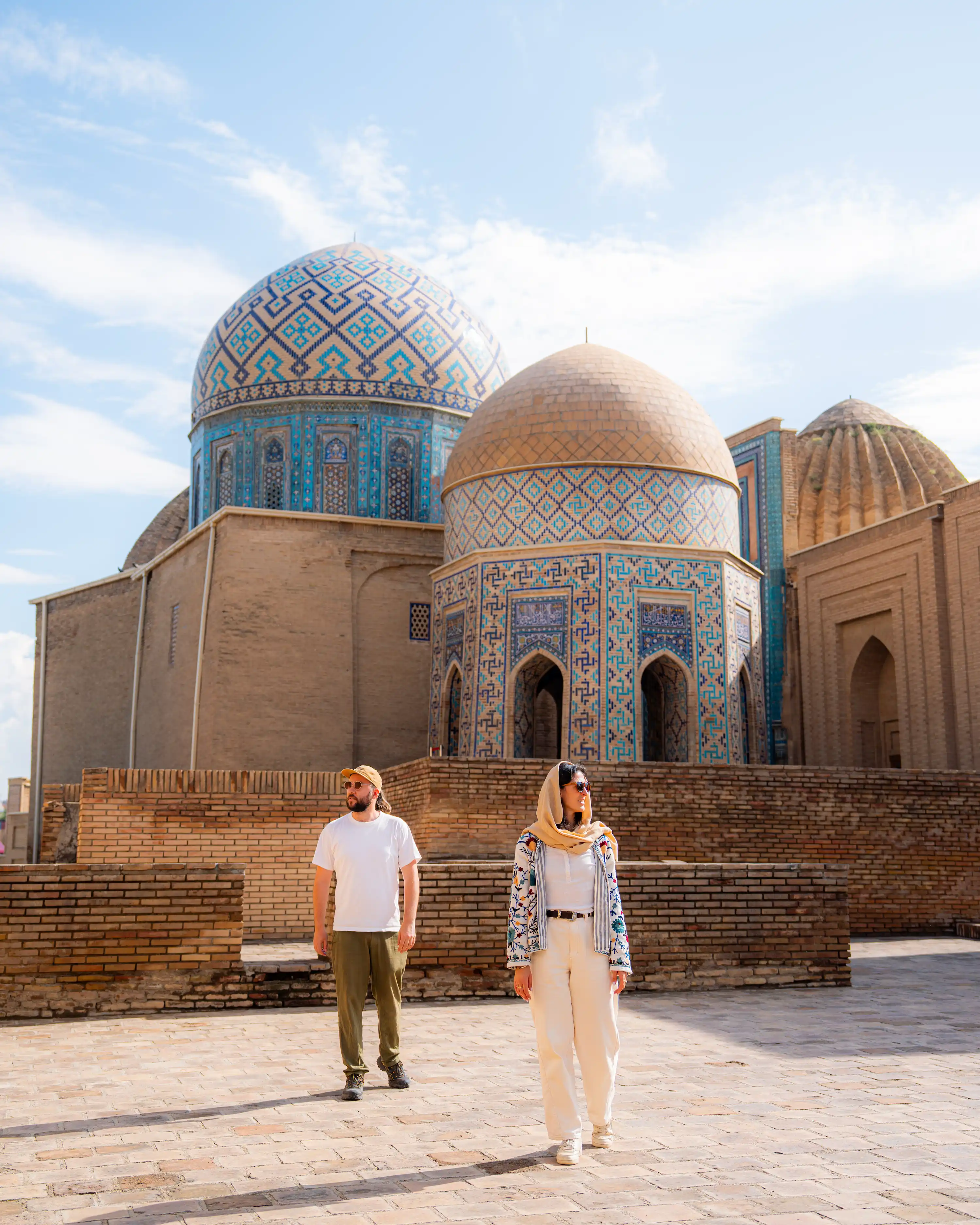
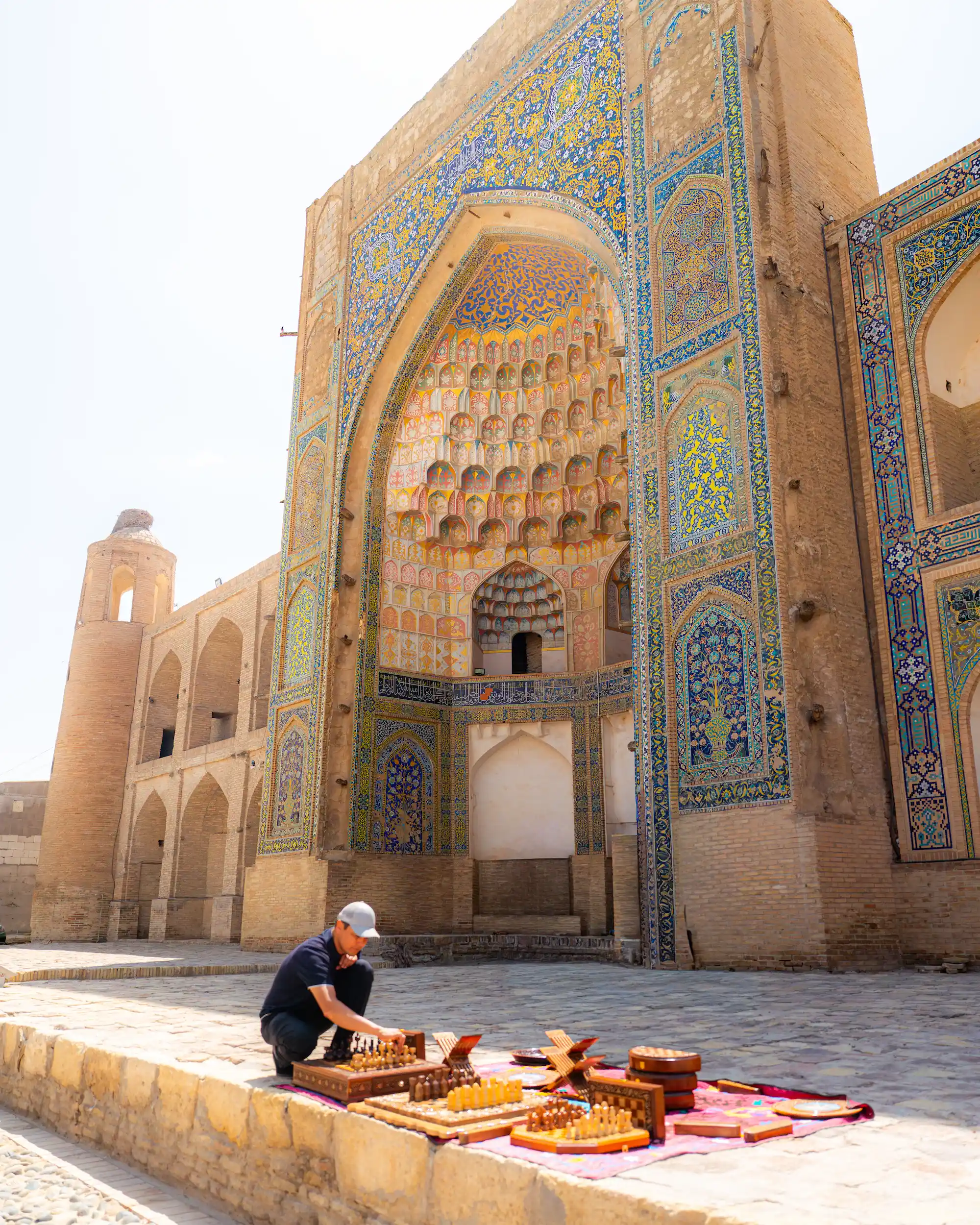
Here, it's a whole different story. You swap nature for cities, mosques, madrasas and mausoleums. And wow… architecture-wise, it's a knockout. Those turquoise-blue mosaics covering the monuments, those domes, … it's all magnificent!
Samarkand and Bukhara absolutely live up to their reputation, with all the monuments they hold: the Registan, the Shah-i-Zinda necropolis, the Kalon Mosque…
That said, we've got one small disappointment to share honestly (because telling you how things really are is our thing): we learned on-site that a large part of the monuments were rebuilt after 1980, even after 1991. Earthquakes, wars, the passage of Tamerlane (if the name means nothing to you, don't worry, it didn't to us either at first — but it's one you'll hear a lot on this trip. He was a great conqueror, or rather a tyrant and warlord who left a lot of destruction in his wake), the Soviet era… Between all that, many buildings were destroyed over the centuries, then rebuilt, sometimes almost from scratch. As a result, you're admiring wonders, but you realise they're less "ancient" than the Silk Road in your imagination had sold you.
It takes nothing away from the beauty of the place, but it does set the record straight, and it's worth knowing before you go so you're not caught off guard.
If you're more into wide-open spaces, hiking and nature, you'll love Kazakhstan. If you're more into cities, history and architecture, Uzbekistan is for you.
Nomade Aventure offers trips by country, but the good news is that the trip we did combined both — so you don't necessarily have to choose! And honestly, it's the contrast between the two that makes the experience so rich.
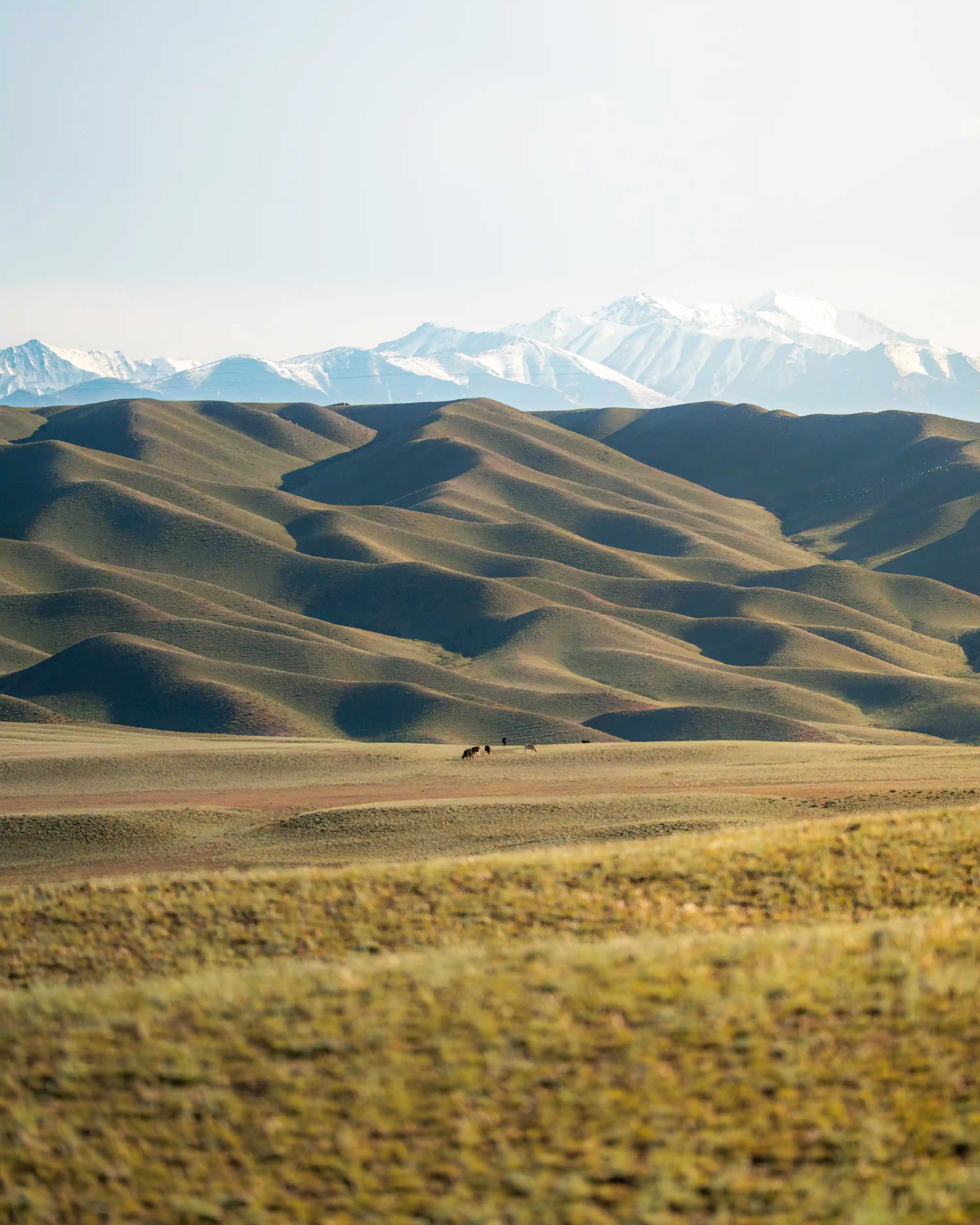
We won't give you a day-by-day logbook, that would be long and a bit dull, but here's the thread of the trip so you can picture the pace.
We land in Almaty, Kazakhstan's former capital and largest city, nestled at the foot of the mountains. A first urban taster before heading off into nature.
From there, off to Altyn-Emel National Park with its singing dune, Aktau mountain (a word that literally means "mountain" 😅) and Katutau. Then on to Charyn Canyon, Lake Kaindy and the Kolsai Lakes, with nights in a guesthouse in Saty. This is the "wide-open spaces" part of the trip, and clearly our favourite.
Next, on to the historic Silk Road on the Kazakh side: we reached Taraz, one of the country's oldest cities, on a night train (an experience in itself), then Turkestan, nicknamed "the Mecca of Kazakhstan" for its superb Mausoleum of Khoja Ahmed Yasawi (a UNESCO site, and that one really is the genuine article!), not forgetting the Otrar oasis and Shymkent.
We cross the border on foot into Uzbekistan, where our local guide picks us up, then we visit Tashkent, the capital.
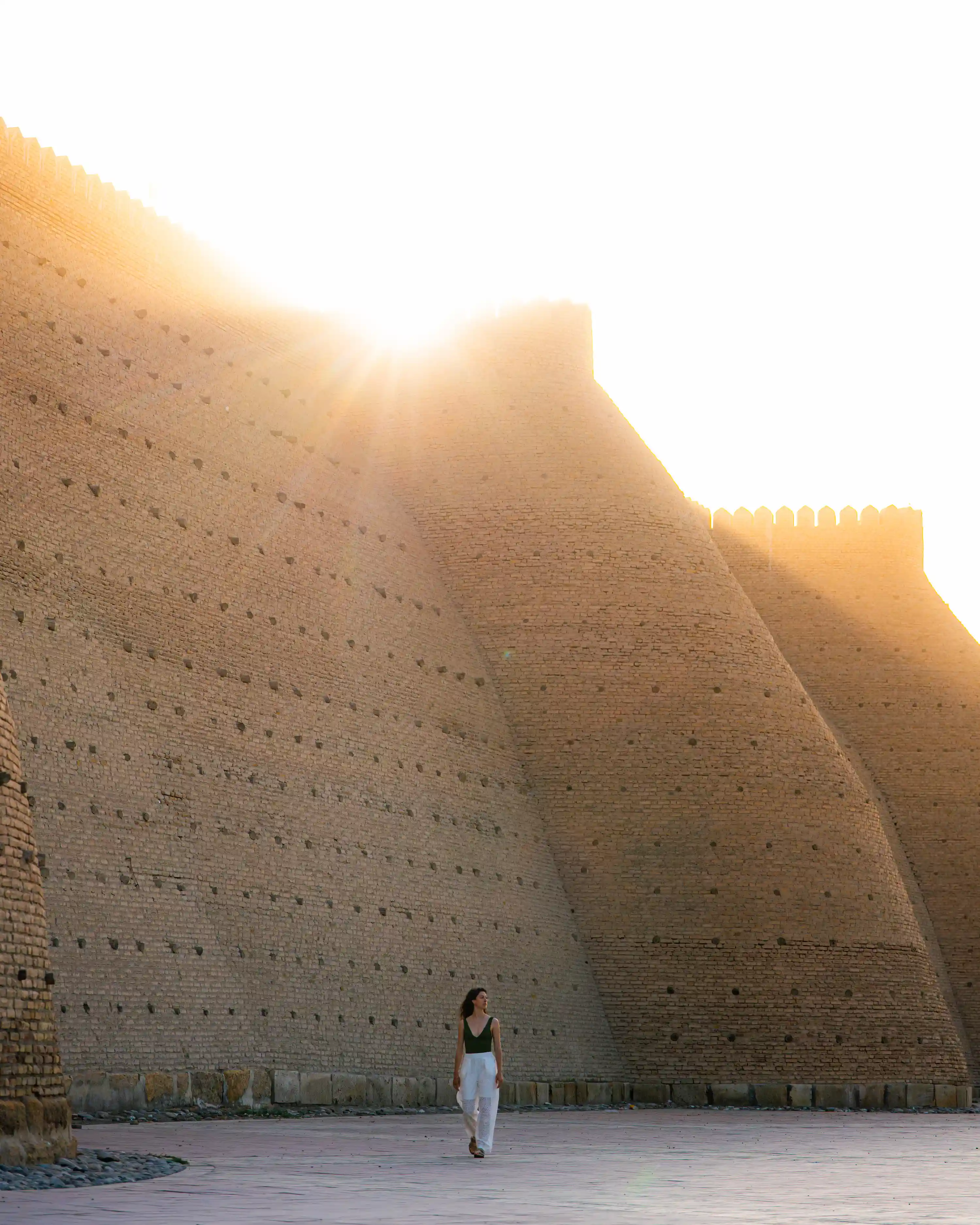
We take the train to the trip's two headliners: Samarkand (the Registan, the Shah-i-Zinda necropolis ❤️, the Gur-e-Amir mausoleum, the Bibi-Khanym Mosque…) and Bukhara (the Ark fortress, the Miri Arab Madrasa, the Kalon Mosque, Chor Minor, the trading domes…). Before heading back to Tashkent for our flight home.
The trains between cities are super comfortable (economy class is almost like SNCF first class, with free power sockets and sometimes even a free snack).
Here's THE topic we have quite a lot to say about, because it was our first time. We're the type to organise everything ourselves, from a little city break to a long road trip across a country, or even right across Europe.
The idea of an "organised group trip" gave us a bit of a preconception, we won't lie. We were afraid of two things (well, three, but the last one is about our content-creator work, not the trip itself):
The verdict? We were pleasantly surprised.
Let us explain!
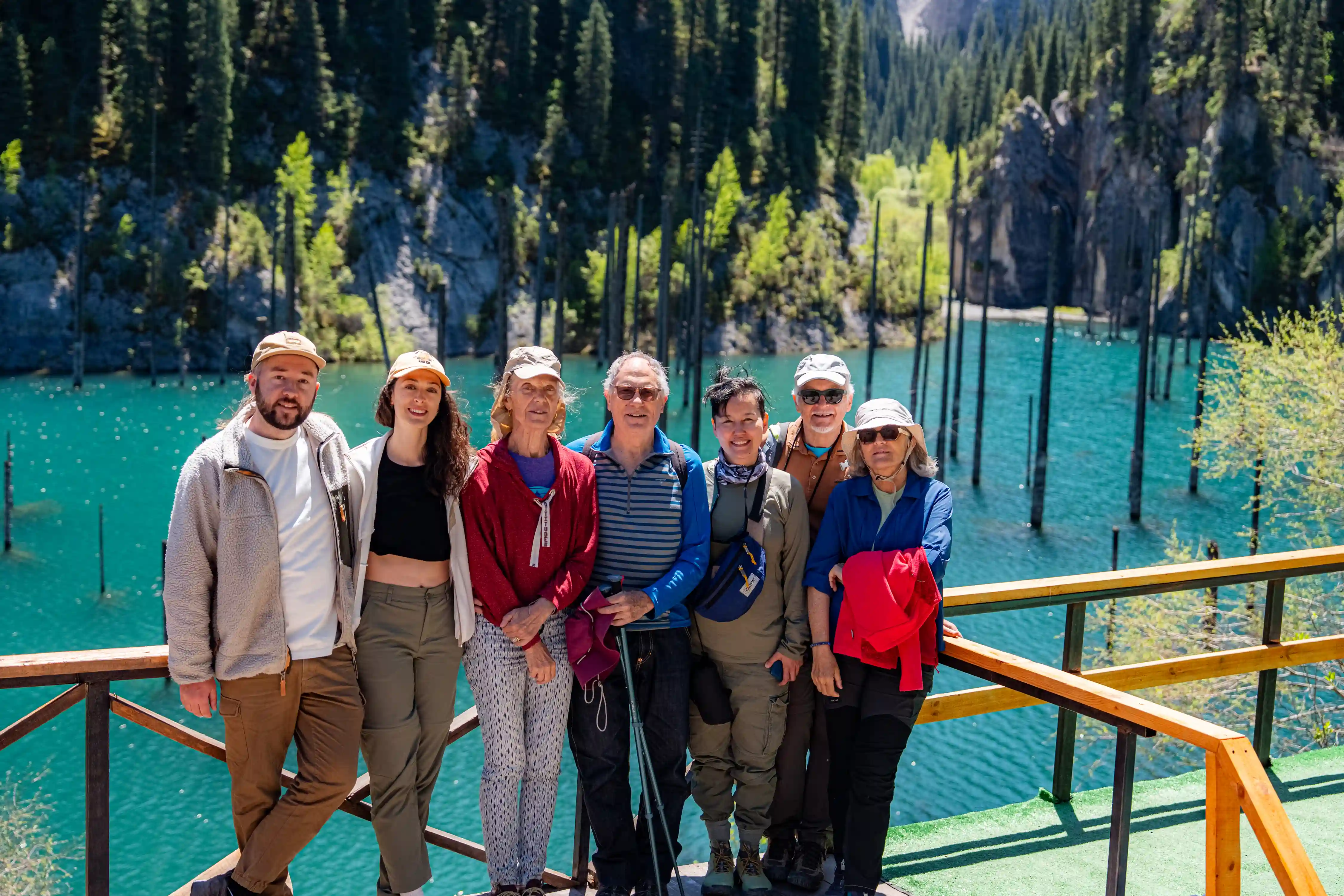
There were 6 of us in the group. That's small, and it changes everything: you don't get that herd feeling we'd been dreading. We were with two other couples. Sure, they were much older than us (mid-sixties to seventy or so), and we'd wondered whether the generation gap would be an issue… well, not at all.
Age matters very little, really. What matters is your mindset! And precisely, the people who choose this kind of trip — especially with Nomade Aventure (which tends to attract curious, open, off-the-beaten-track wanderers) — are generally open-minded and easy to get along with.
As anywhere, there can always be someone you click with a little less, that's human, but on the whole you meet lovely people and share a real slice of life with them. And that's a richness we hadn't anticipated!
Another fear laid to rest: free time is built into the itinerary to explore on your own, wander, take photos or rest. The programme is structured, but not military.
And what about time at the spots for content creation? The guide really adapts to the group and its pace, so we still managed to take all the photos and time we wanted (even if we held back a bit on that front, because we could have stayed for hours and hours in some places). It didn't bother the rest of the group, who were super nice and understanding!
And here we get to the real luxury of this kind of formula: zero mental load.
In countries that are still barely touristy like these, organising the whole itinerary yourself, digging up the right info (not always available in French or even English, by the way), handling transport, borders, accommodation… it's a massive job.
Here, you've got nothing to manage! You just go with the flow, you simply enjoy, and you realise how restful it is.
For us, who are used to planning everything, it was a bit of a revelation.
Let's be honest, travelling with an agency is inevitably more expensive than doing the country backpacker-style, rucksack on your back. That's just maths. But if you wanted to recreate exactly this trip — private driver and vehicle, French-speaking local guide, booked accommodation, organised train journeys, meals in hand-picked local restaurants… — you'd quickly realise it's complicated to put together on your own: you need the right contacts on the ground, and for two people the bill would probably climb higher.
In a group it's the opposite: the services are negotiated and split across the number of participants. You share the guide, the transport, the logistics. In short, for a trip of this standard, it's the smartest format.
If there's one thing we understood on this trip, it's that the guide makes 80% of the experience. A good guide, and your trip goes from "nice" to "unforgettable".
Our guide in Kazakhstan, Aïto, was quite simply brilliant ❤️. It's largely thanks to her that our time in Kazakhstan was so exceptional. She's passionate, fascinating, attentive to every detail, she knew her country inside out and knew how to make us live the places rather than just show them to us.
We came away with memories that owe her so much! And the rest of the group (even though they're used to this kind of trip) completely agreed that Aïto was exceptional. We even reckoned she was the best guide in Central Asia!
The moral: the quality of the guide is decisive, and that's also where a serious agency makes the difference, by relying on French-speaking local guides who know their region from the inside.
Because even though this article is the result of a collaboration with Nomade Aventure, you know us — we're not going to sell you a dream in advertising mode if that's not what we actually thought! Here's our honest feeling.
Before this trip, we only knew Nomade Aventure by name, nothing more. Chatting with people around us, we realised that some in our circle had already travelled with them. We knew they were a reference in adventure travel (the company has been around since 1975, no less) but we'd never tried them.
Today, what won us over isn't so much the destination (as beautiful as it is) as the way of travelling.
What we'll remember:
And for those hesitating like we were: yes, an agency can absolutely respect the "wanderer" spirit while taking the logistical load off you. That's exactly what we experienced.
If you're tempted and want to do the same trip as us with Nomade Aventure, you can find it here:
We're leaving you the link so you can take a look at the trip details and the full programme.
Now, let's talk money, because you're bound to be wondering.
The tour runs between €4,699 and €4,899 per person depending on the departure date, for 19 days.
It may sound like a lot, but look at what's included:
What's not included: optional insurance (repatriation, medical assistance, cancellation), optional activities or those done during free time, drinks and any tips.
When you factor in the flights, meals and all the logistics, the value for money really holds up, especially for a destination where organizing it all yourself would be a headache.
To help you work out whether this trip is for you, here's our no-nonsense little recap.
✅ Go for it if you love:
❌ Give it a miss if you're after:
In short, it's a trip for the curious, for lovers of discovery and nature, for those who want something authentic without the stress of organising.
Good news: for French citizens, no visa is required for a tourist stay of less than 30 days, neither for Kazakhstan (exemption in force since 2022) nor for Uzbekistan. Just make sure your passport is valid for at least 6 months after your planned exit date, with a few blank pages. (Always check the up-to-date conditions on your government's travel advisory before leaving, as rules can change.)
Spring (April to June) and autumn (September to November). Temperatures are mild and pleasant for sightseeing. Avoid summer: from mid-June, Silk Road cities like Bukhara and Samarkand regularly top 40°C (even 50°C in Bukhara), which makes visiting really gruelling. And winter is properly cold. We went in May and it was perfect. We could even have gone in April to enjoy spring and all the fields in bloom.
Yes, absolutely! Kazakhstan and Uzbekistan are safe destinations, with warm and welcoming people. As anywhere, apply common-sense precautions.
The tour is rated "active" level. Nothing super sporty, really. The trip alternates between city visits (on foot and by transport) and nature sites with easy little walks and hikes. Nothing out of reach, then. In our group, one person even had a knee replacement and walked at their own pace, but they were able to do everything without any trouble!
The locals tell you yes, but since you never know how you'll react, when in doubt it's best to stick to bottled water to avoid any tummy troubles. The guide arranges water refills anyway, so no worries there. On our side, we had a filter bottle (very handy, you don't have to think about it), and we also drank tap water (unfiltered) now and then, without getting sick.
Yes, these are big countries, so there's quite a bit of driving, especially in Kazakhstan. But part of the journeys are done by train (including a lovely night sleeper train), which breaks up the monotony and is part of the experience.
Totally! In our group, as we said above, there were couples from different generations (us in our early thirties, and the two other couples over sixty). Everyone found their place, their pace and got what they were after. In the end, the atmosphere and the conversations matter more than age.
We'd got an eSIM and, on the whole, yes — especially in the cities. In small villages or out in nature, though, the connection is trickier, even non-existent. Even the wifi can sometimes be a bit slow and temperamental outside the big cities. Internet was an important point for us since we were working and had to post stories and content every day, but if you take that constraint away, it's doable with just the wifi at your accommodation or in restaurants. If you'd still like a connection during your trip, we recommend getting an eSIM (we've actually got a whole article on the subject on the blog, which you can find here 😉).
The Silk Road was one of those trips we filed under "maybe one day" (when we'd have time to look into it and organise it). We have to say we're so glad we pulled it out of that box! Between Kazakhstan's wild wide-open spaces (our big favourite) and Uzbekistan's architectural beauty, we discovered an authentic region, still spared from mass tourism, and incredibly rich.
And above all, we now see small-group travel in a new light. We were sceptical, and we came away with nothing but positives: the lovely encounters, the comfort of going with the flow and that famous zero mental load are well worth the small trade-off on total freedom. For a destination like this one, it's even, in our opinion, the best way to discover it.
If the adventure tempts you, you can find the full programme for the Silk Road trip through Uzbekistan and Kazakhstan on the Nomade Aventure website.
So, does the Silk Road tempt you? Let us know in the comments, and don't hesitate to ask us your questions, we're always happy to answer! 🦊
Article produced in collaboration with Nomade Aventure. As always, the opinions and impressions shared here are 100% our own.
1. Pack covering clothes. Kazakhstan and Uzbekistan are Muslim countries (mostly non-practising in Kazakhstan, but mostly practising in Uzbekistan). In both cases, even though the atmosphere stays relaxed, you'll visit lots of mausoleums, mosques and madrasas where you need to cover your shoulders, head and legs.
Slip some long, light clothes into your suitcase (linen is your friend given the heat): you'll be comfortable getting in everywhere without any hassle. And don't forget a light scarf for women, to cover your head in places of worship.
2. Bring walking clothes and shoes, for the nature walks and hikes in Kazakhstan. Our guide often advised us to wear trousers rather than shorts (because of the tick risk, even though we never saw or got any).
3. Watch out for drones! They're banned in Uzbekistan but allowed in Kazakhstan. The catch is that on a combined tour you can't really bring one (you risk trouble, even jail, at the border on the Uzbek side). Our tip if you really want one: rent a drone on-site in Almaty just for the Kazakh national-parks section, where the landscapes are really worth it from the sky. We went through Go Rental. For around 15,000 to 23,000 tenge per day depending on the model (roughly €29 to €43 a day). Our total rental over 6 days for a DJI Mini 5 Pro with an RC-2 controller cost us €220. It's pricey for the local cost of living, but it stays reasonable for bringing home some incredible footage.



How about we chat?